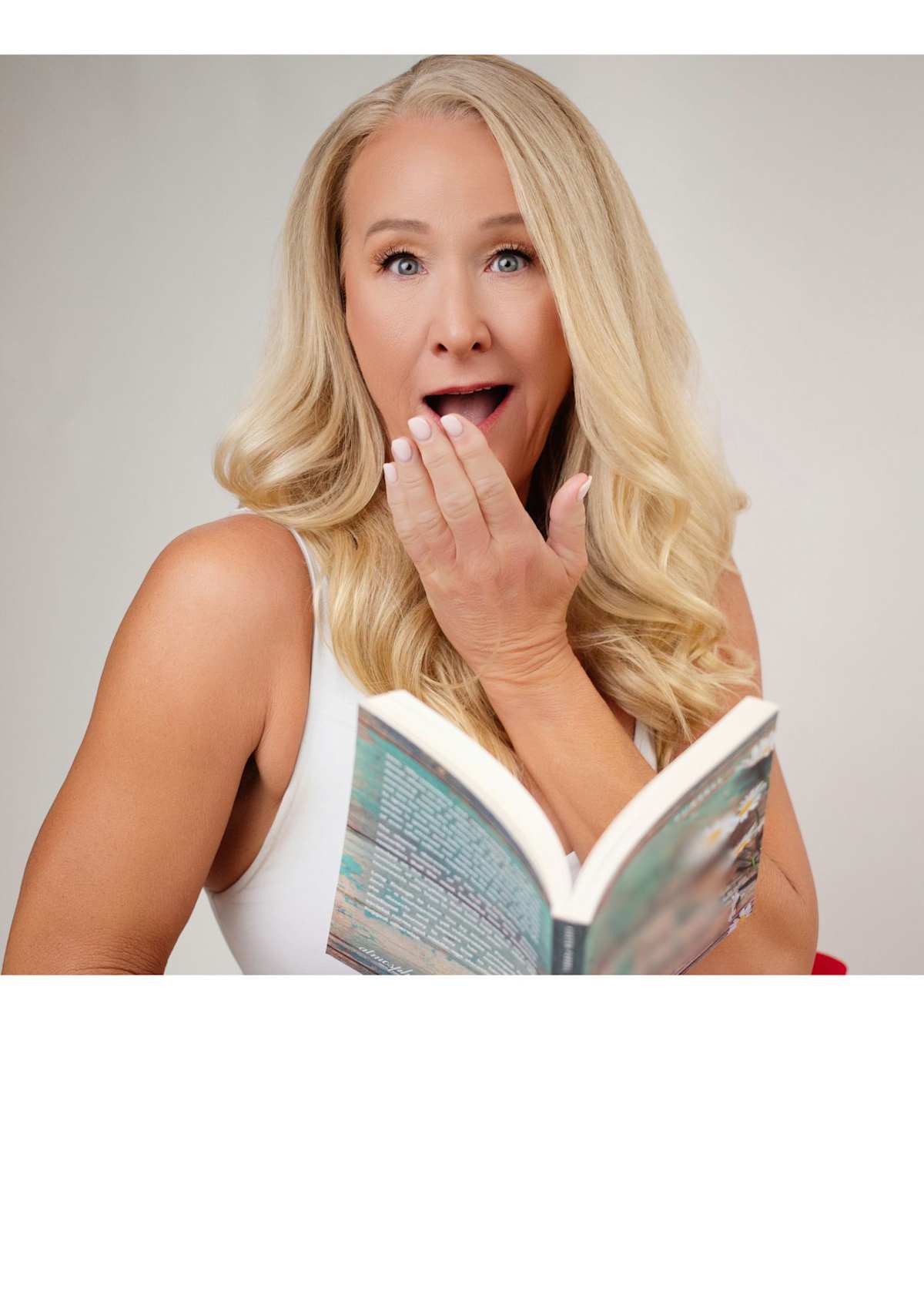
The first time someone called me “the Taylor Swift of middle-aged women,” I wasn’t sure how to take it. I don’t write songs about the men I date — but I do take pieces of what they give me and weave them into my books. How could I not? The material is often richer than anything my imagination could invent.
I wasn’t a lifelong dater. I had boyfriends. Then a marriage. So when my marriage ended and I met a wonderful man, I thought I’d dodged the dating-app bullet entirely. The relief was immense. The stories I’d heard terrified me. I was never eager to “get back out there.”
Then that wonderful man broke my heart.
The silver lining — if you can call it that — was fuel. He even fact-checked the book after it was published. Yes. More on that later.
In 2023, I wrote Long Enough to Love You, a novel rooted in the emotions I was wrestling with as I examined my marriage, my role in it, and my future. What I didn’t yet realize was missing was the reconnection with my first love. That reconnection became an awakening: we are all flawed, hungry to be seen, desperate to be heard, longing to be desired. He reminded me of who I was at seventeen — a version of myself I’d lost along the way.
Seventeen and mid-fifties aren’t the same, but the imprint of first love can last a lifetime. That’s what the book explored.
After my divorce, I met a man who showed me what it felt like to be truly seen — daily. Falling in love in my fifties was exhilarating. I knew who I was. I knew what I wanted. And I rejected the idea that women should quietly disappear after menopause, grateful for whatever scraps of attention remain. Bake. Cook. Don’t complain. Be thankful. Ugh.
He became the prototype for Beau in Finding Scarlet, a story about owning your truth after divorce and reigniting long-dormant desire. Writing it was joyful because it came from lived experience.
Of course, fiction allows for narrative and artistic freedom. Like Tripp and Beau, these men were inspired by real people, real feelings — but they are not them. Just as Jenn and Scarlet are not me. Not wholly. Never entirely.
Which brings us back to Taylor Swift.
When that wonderful man shattered my heart, I was crushed. And then came The Unabridged Life of Missy Kinkaid. Missy needed chapters about heartbreak in her fifties. Writing them was brutal — and cathartic. I used creative license, as always. Only he and I know what was real and what was stretched.
It’s fiction. If a man recognizes himself in my books, he can relax. His reputation is safe. My platform is small. Even the men Taylor Swift allegedly writes about survive just fine. Maybe their egos take a hit. But it makes great art. And in my case, it deepens the emotional layers of my stories.
As for dating apps — I wasn’t spared. I’ve been on enough dates to inspire an entire chapter called “The Ick.” I couldn’t make these men up if I tried. Their histories. Their “work.” (We’re all a work in progress, but that one always makes me laugh.)
Would I date an author who writes women’s fiction and romance? Most men probably wouldn’t. A confident one? I’d hope so. But my characters grow from seeds of experience — sometimes tender, sometimes hilariously cringe-worthy, sometimes too sad to tell. Angry men — at exes, the world, politics — never make the cut. I’m a glass-half-full person, even when I knock it over now and then.
So maybe I am a little like Taylor Swift. Minus the platform, the money, the fanbase, and the endless suitors. I get app scraps. But somewhere in there is a chewy, delicious morsel who’s lived through his own version of heartbreak — and maybe even inspired someone else’s story.
Side note: My mom worries the mothers in my books are based on her. They are not. Not even a little. My mom is remarkable. Emotionally unavailable mothers are purely fictional. Sorry, Mom. Just like Taylor Swift, I adore my mother. Maybe I am the middle-aged version after all.